Best eSIM for Los Angeles During the World Cup 2026 (SoFi Stadium, 8 Matches)
SoFi Stadium in Inglewood hosts 8 World Cup 2026 matches, including a quarterfinal. If you are flying to LAX for the Los Angeles leg, an eSIM is the cheapest way to stay connected across the LA basin. This guide covers the coverage, the right plan to pick, and how to survive the 405.
adminFox
Los Angeles is the second-busiest World Cup 2026 host city. SoFi Stadium in Inglewood hosts eight matches, including a quarterfinal on July 11. The stadium is state-of-the-art and sits in the heart of LA, and the city is the largest and most spread-out host city in the United States. For international fans flying in from Mexico, Central America, or South America, a Los Angeles eSIM is the difference between reaching the stadium on time and missing the opening whistle in 405 traffic. This guide explains which eSIM is the best eSIM for Los Angeles during the World Cup, how the coverage works, and which plan to pick.
If you are visiting only the United States, the best eSIM for the United States during the World Cup is covered in our US guide. If you are combining the US with Mexico or Canada, our regional eSIM guide covers the plan that works across all three countries with a single activation.
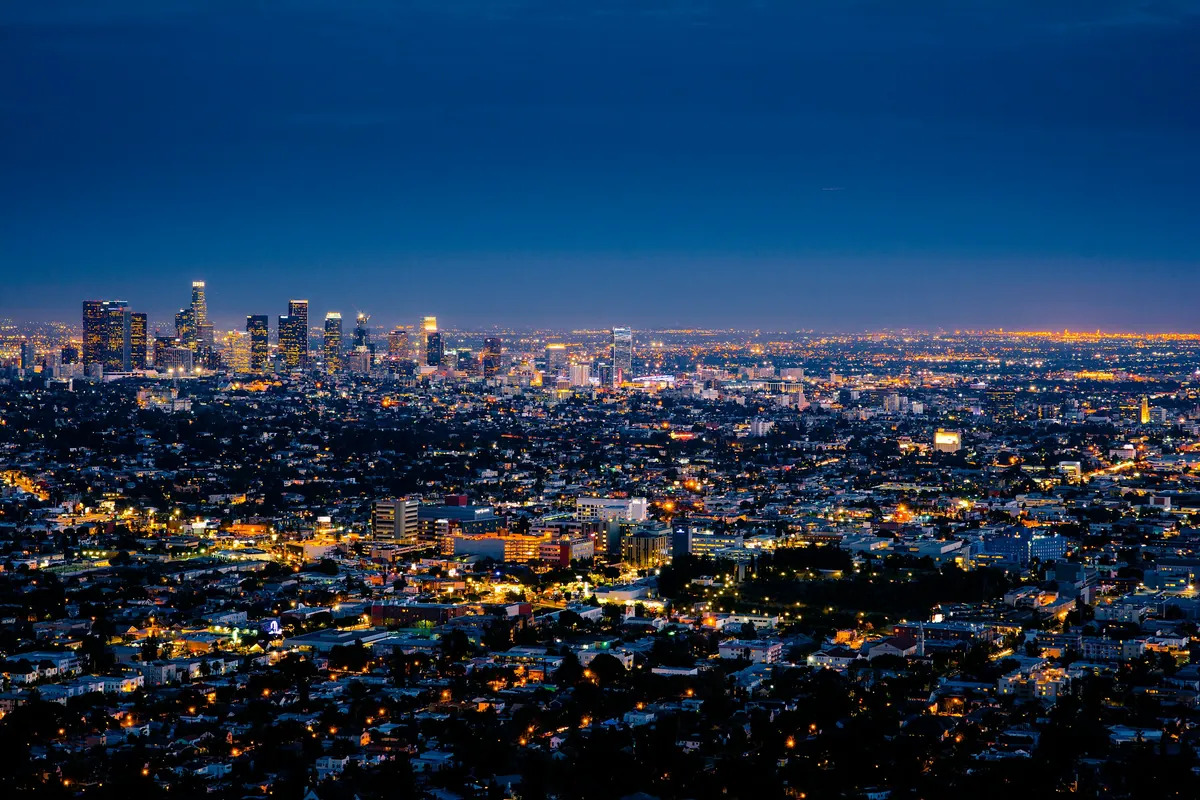
Downtown Los Angeles, seen from the LA basin. The city covers 500 square miles, the largest of any 2026 host.
Why Los Angeles is special for Latin American fans
Los Angeles has the largest Latino population of any US city (more than 4.8 million Hispanics in the metro area). For fans from Mexico, Guatemala, El Salvador, Honduras, Colombia, Peru, or Argentina, LA feels almost like home. The practical advantage: most signage, menus, and customer service are in Spanish, which eliminates the language barrier of the rest of the United States.
The other advantage is logistics. Flights from any Latin American capital to LAX are frequent and relatively cheap. Combined with a domestic flight to another US host city (San Francisco, Seattle, Houston, Dallas, Miami), LA is the ideal base for a US World Cup swing.
Coverage in the Los Angeles region
LA has more cell towers than any other US metropolitan area, but the mountain geography and the basin create dead zones in canyons and along Mulholland Drive. The differences between carriers are real, especially indoors.
Area
Best carrier
Detail
Downtown Los Angeles
Tie
All three carriers have strong 5G
LAX airport
Tie
All three have full coverage in the terminals
SoFi Stadium, Inglewood
T-Mobile
Strongest inside the stadium bowl
Santa Monica and Venice
Verizon
Better beach coverage
Beverly Hills
AT&T
Better indoor coverage at luxury hotels
Topanga Canyon
Weak
All three carriers have issues here
SoFi Stadium in detail
SoFi Stadium is the most modern venue on the 2026 World Cup host list. The bowl has full 5G coverage from T-Mobile and AT&T, with Verizon close behind. Stadium Wi-Fi is excellent under normal conditions, but it collapses with 70,000 fans. A Los Angeles eSIM is the only reliable way to stream goals, share photos, and find your seat with mobile tickets.
From LAX to the stadium
The 405 is the most congested freeway in the United States, and SoFi Stadium is right next to it. Plan for 90 minutes of travel time even though the actual distance is only 12 miles. A Los Angeles eSIM keeps Google Maps and Waze live with real-time traffic, and the LA Metro C Line now has a direct stop at the stadium if you prefer public transit.
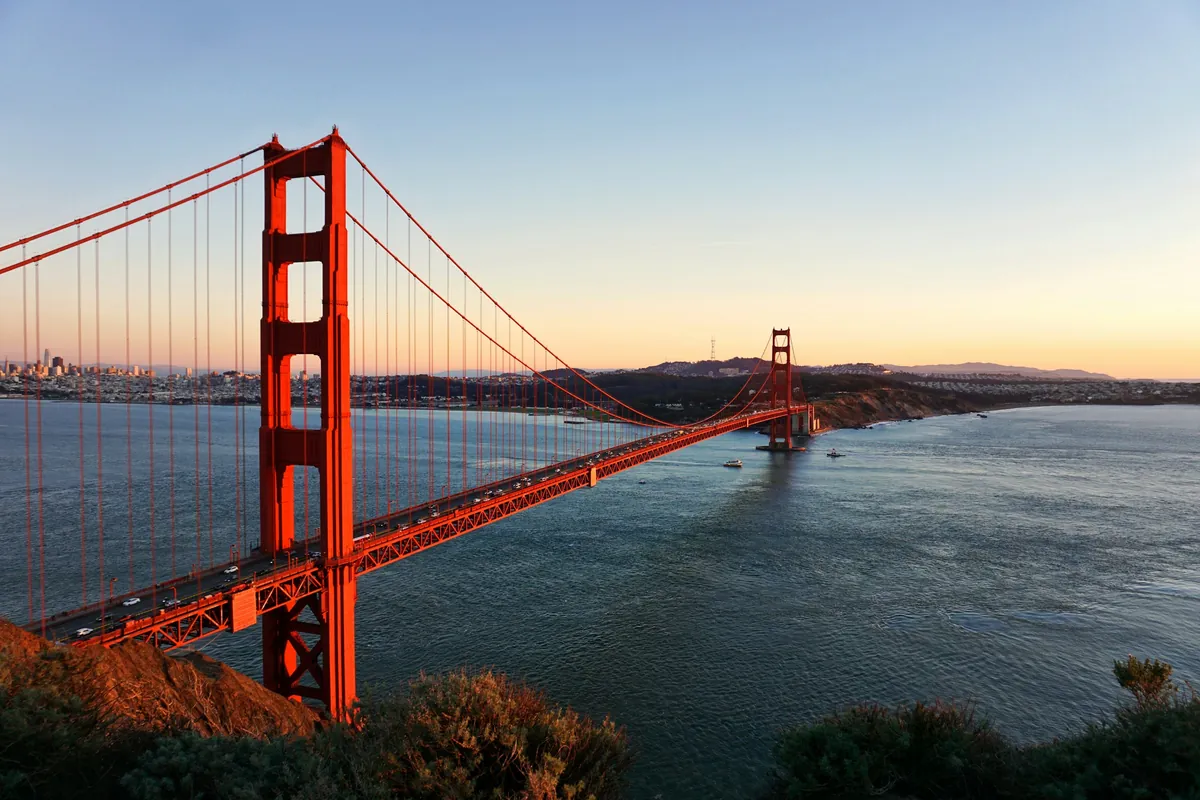
San Francisco is also a 2026 US host city, sharing Pacific coast coverage with Los Angeles.
How much data you need for Los Angeles
A tournament trip to Los Angeles is more data-intensive than most US cities because of driving. Navigation, ride-share, music streaming in traffic, and constant photos at the stadium add up fast.
1 GB / 7 days. Tight. Only if you are going to one match.
3 GB / 15 days. Enough for a two-match trip with light use.
5 GB / 30 days. The right plan for the full LA swing.
10 GB / 30 days. For content creators and remote workers.
Unlimited / 30 days. For journalists and broadcast teams.
Los Angeles eSIM versus airport SIM
LAX has more carrier kiosks than most US airports, but the queues are long, the staff is often slow, and activation requires a US billing address. A Los Angeles eSIM eliminates all of that. You buy online before the flight, scan a QR code, and the eSIM auto-connects to the US network on landing.
The other option is roaming, which works but is overpriced. A 1 GB roaming pass from a Spanish or Latin American operator often costs more than a 3 GB Los Angeles eSIM.
Activation and timing
Install the eSIM at home with Wi-Fi the day before you fly. The data clock does not start until the eSIM connects to the US network, so buying in advance wastes nothing. Set it up as a secondary line and keep your primary SIM active if you want to keep your number for SMS two-factor authentication.
Mistakes that cost money
Do not rely only on Google Maps without a data connection in LA. The freeways change every week with new HOV lanes, ramp closures, and express lane pricing, and offline maps lag by months. Do not leave your home operator's roaming as a "safety net"; a 90-minute 405 traffic jam with music streaming can add 20 USD in roaming. Do not rent a car for the LA leg unless necessary; the LA Metro and ride-share apps work well for most match days.
Travel apps work best with steady data. A Los Angeles eSIM keeps them running through 405 traffic and inside SoFi Stadium.
Pre-trip checklist
Verify your phone is unlocked and eSIM-compatible.
Buy a Los Angeles eSIM with the right data size for the number of matches you are watching.
Install it at home with Wi-Fi the day before you fly.
Save offline maps of LA County and the SoFi Stadium area in Google Maps.
Download the LA Metro app for public transit schedules.
Keep your primary line active for SMS two-factor authentication.
Los Angeles rewards fans who plan their data in advance. With a reliable Los Angeles eSIM, you spend your time at the match and on the beach, not in airport kiosk queues or staring at the spinning wheel of a frozen navigation app.