Best eSIM for the United States During the World Cup 2026 (11 Cities, Final at MetLife)
The United States hosts 78 of the 104 World Cup 2026 matches across 11 cities, with the final at MetLife Stadium on July 19. If you are flying in from Latin America or Europe, a US eSIM is the cheapest way to stay connected in all 11 host cities. This guide covers the coverage, the right plan to pick, and which mistakes to avoid.
adminFox
The United States hosts the bulk of the 2026 World Cup, with 11 cities sharing 78 of the 104 matches and the final at MetLife Stadium in New Jersey on July 19. For international fans flying in from Latin America, Europe, or elsewhere, the combination of a US eSIM plus optional regional coverage is what decides whether the trip goes smoothly or turns into a connectivity mess. This guide explains which eSIM is the best eSIM for the United States during the World Cup, how much it costs, and which mistakes to avoid.
If you are visiting only the US, a single-country eSIM is enough. If you are combining the US with Mexico or Canada, our regional eSIM guide covers the plan that works in all three countries with a single activation.
The US hosts 78 of the 104 World Cup 2026 matches across 11 cities. The final is at MetLife Stadium in New Jersey.
Most international fans will arrive in the United States as their first stop. The reasons are practical:
The US has more direct flights from any Latin American or European capital than the other two hosts.
It has 11 of the 16 host cities, which lets you cover almost the entire tournament calendar.
The final is here (MetLife Stadium, July 19, 2026), so a US trip ends the tournament at its peak moment.
A reliable eSIM for the United States keeps you connected in all 11 host cities, on the New York subway, on the 405 in Los Angeles, and on Miami Beach, without buying a physical SIM at every stop.
Coverage by region
The 11 host cities have excellent coverage from the three big carriers (AT&T, T-Mobile, Verizon), but there are regional differences that matter.
Region
Recommended carrier
Detail
Northeast (New York, Boston, Philadelphia)
AT&T and Verizon tied
Strong 5G in Manhattan, full coverage in suburbs
Southeast (Miami, Atlanta)
AT&T
5G in Miami Beach, solid coverage at the stadiums
Central (Dallas, Houston, Kansas City)
T-Mobile and AT&T tied
5G downtown, 4G in suburban areas
West (Los Angeles, San Francisco, Seattle)
T-Mobile
5G in Los Angeles, best outdoors in Seattle
Northeast: New York, Boston, Philadelphia
The Northeast is the most match-heavy region. MetLife Stadium in New Jersey hosts 8 matches including the final. AT&T and Verizon tie for 5G coverage in Manhattan, and T-Mobile is close. In the New York subway, coverage varies by station; a US eSIM does not solve the tunnel dead zones, but it does keep Google Maps running above ground and your mobile ticket QR codes intact.
Southeast: Miami, Atlanta
Miami and Atlanta are the two warmest host cities. AT&T leads in both. Hard Rock Stadium in Miami Gardens has full 5G in the bowl, and Mercedes-Benz Stadium in Atlanta is one of the most connectivity-friendly venues of the tournament. For Spanish-speaking fans, Miami has the added advantage that Spanish is the working language at restaurants, ride-shares, and most services.
Central: Dallas, Houston, Kansas City
Central US is where the most knockout-stage matches will be played. Dallas, with AT&T Stadium (80,000 seats), is the largest venue. Houston has a retractable roof at NRG Stadium for the Texas heat. T-Mobile and AT&T tie for 5G coverage across the three cities.
West: Los Angeles, San Francisco Bay Area, Seattle
The West Coast has three host cities. SoFi Stadium in Los Angeles (8 matches including a quarterfinal) is the most modern venue. Levi's Stadium in Santa Clara, near San Francisco, hosts 6 matches. Lumen Field in Seattle is famous for its noise. T-Mobile leads for 5G coverage in all three.
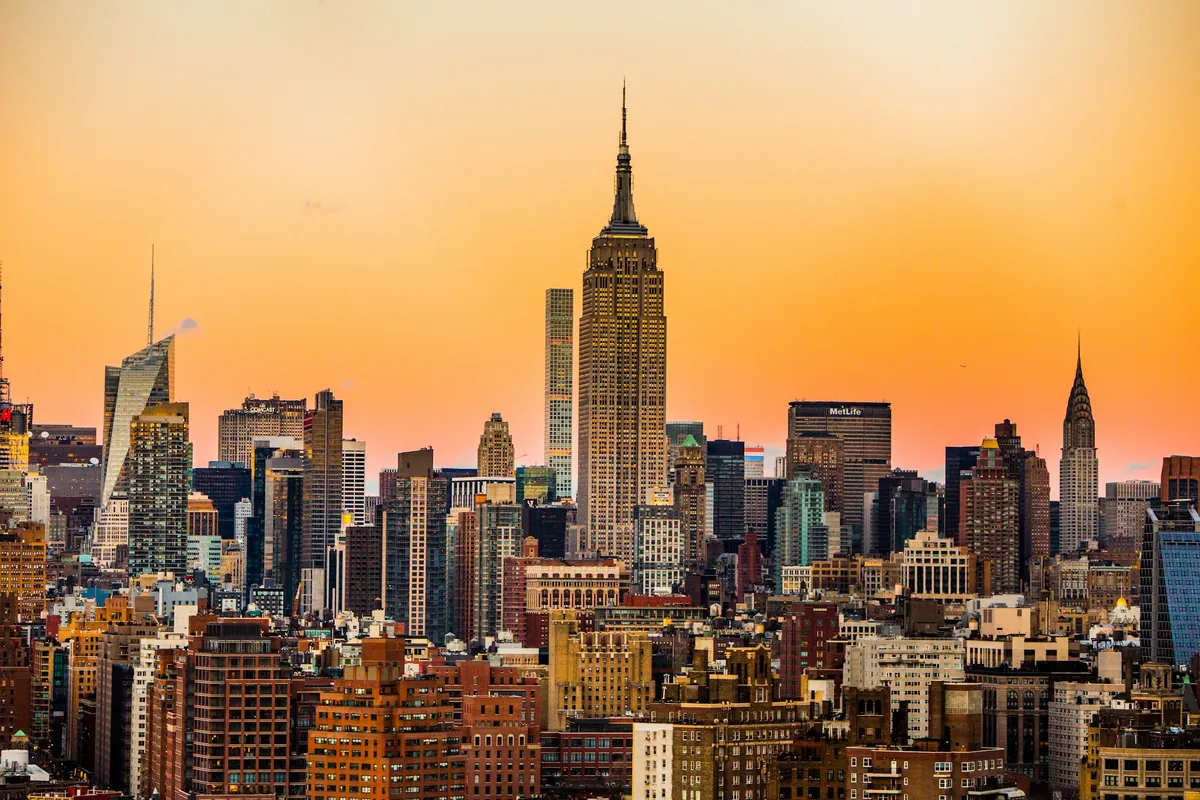
Manhattan and the East Rutherford skyline in one frame. The 2026 final is the first World Cup final in the New York metro area.
How much data you need
A US World Cup trip is more data-intensive than Canada or Mexico, mostly because of constant Google Maps, ride-share apps, and video on social media.
1 GB / 7 days. Tight. Only if you are going to one match and relying on hotel Wi-Fi.
3 GB / 15 days. Enough for a two-match trip with light use.
5 GB / 30 days. The right plan for the full US swing.
10 GB / 30 days. For content creators and remote workers.
Unlimited / 30 days. For journalists and broadcast teams.
US eSIM versus airport SIM
JFK, LAX, MIA, DFW, ATL, SFO, and SEA all have carrier kiosks. They are expensive, often run out of stock in busy weeks, and activation requires a US billing address. A US eSIM eliminates all of that. You buy online before the flight, scan a QR code, and the eSIM auto-connects to the US network on landing.
The other option is roaming, which works in theory but is built for executives. A 1 GB roaming pass from a Spanish or Latin American operator often costs more than a 3 GB US eSIM.
Activation and timing
Install the eSIM at home with Wi-Fi the day before you fly. The data clock does not start until the eSIM connects to the US network, so buying in advance wastes nothing. Set it up as a secondary line and keep your primary SIM active if you want to keep your number for SMS two-factor authentication.
Mistakes that cost money
Do not rely only on stadium Wi-Fi. It is free, but it slows under match-day load and is often insecure. Do not leave your home operator's roaming as a "safety net"; a single Instagram autoplay video can rack up 30 USD. Do not buy a 1 GB plan expecting to stretch it across two weeks; you will run out of data on day three.
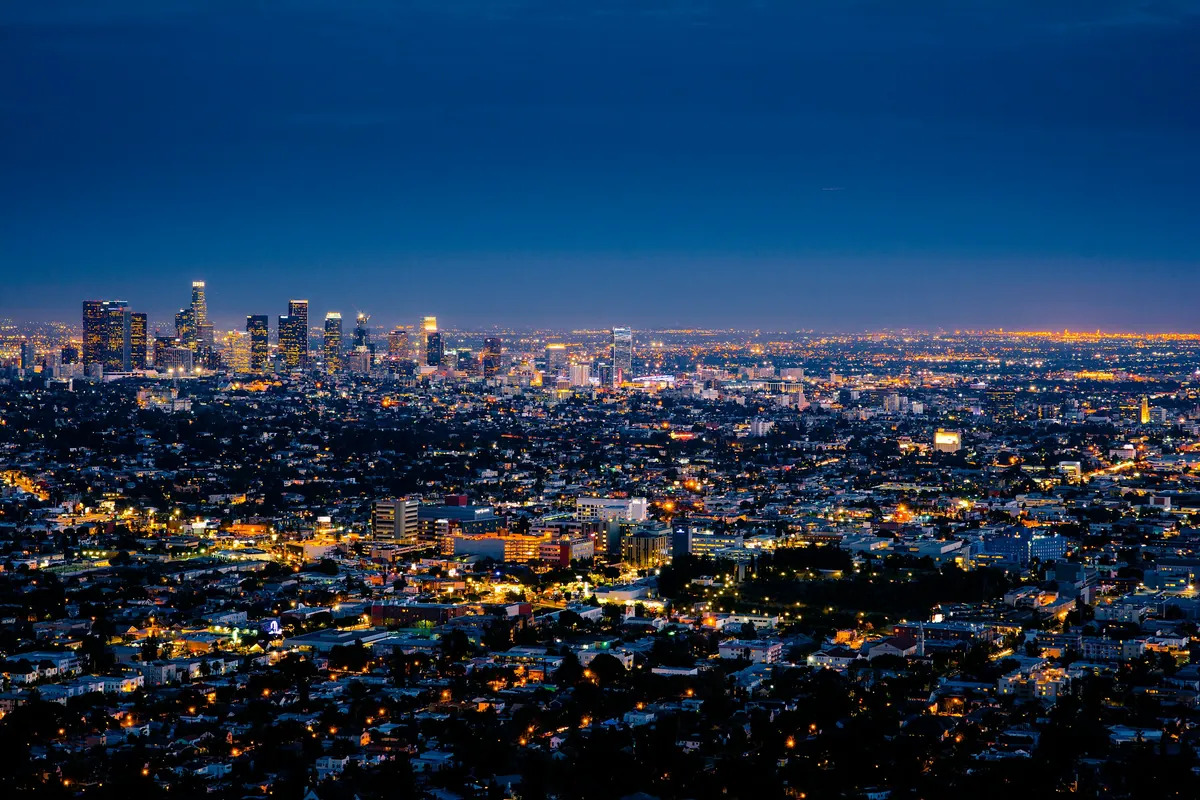
Los Angeles is the second-busiest World Cup 2026 host city, after New York.
City-specific guides
The 11 US host cities each have their own connectivity quirks. For the largest venues and the most international fan traffic:
New York / New Jersey. MetLife Stadium hosts 8 matches including the final. For the best eSIM for New York, our city guide covers Manhattan, the five boroughs, and the NJ Transit logistics for match days.
Los Angeles. SoFi Stadium in Inglewood hosts 8 matches including a quarterfinal. The 405 is the most congested freeway in the country, and a working eSIM keeps Google Maps and Waze live with real-time traffic.
Miami. Hard Rock Stadium in Miami Gardens hosts 7 matches including the third-place match. Spanish is the working language, and the data plan needs to cover both the stadium and South Beach.
For a guide to the city side of the trip, our guide on things to do in New York during the World Cup covers the official Fan Festival at Bryant Park, the free matches at Liberty State Park, and the practical logistics for getting from Manhattan to MetLife on match days.
For fans who did not get a ticket, our guide on how to enjoy the World Cup without tickets covers the official Fan Festivals, the free watch parties at stadium-adjacent Fan Zones, and the city-by-city strategy for soaking up the atmosphere without a stadium seat.
Pre-trip checklist
Verify your phone is unlocked and eSIM-compatible.
Buy a US eSIM with the right data size for the number of matches you are watching.
Install it at home with Wi-Fi the day before you fly.
Save offline maps of each host city you are visiting in Google Maps.
Keep your primary line active for SMS two-factor authentication.
The United States is the main host of the 2026 World Cup, with the final at MetLife Stadium. A reliable US eSIM is the difference between watching the match on a phone that works and spending the second half looking for signal. Spend your time at the stadium, at the Fan Festival, and at the restaurant, not in airport kiosk queues.